
Send themachine first.
Hawk deploys robotic systems for public safety and commercial operations—helping teams assess, access, and operate in difficult environments before people need to go in.
Explore Hawk Mission Adoption™[ REAL-WORLD FIELD EXPERIENCE ]
Field use, not just demonstrations.
Hawk systems have been used in real public-safety training and operational environments. Field experience helps inform how we improve deployment, software, payload integration, and support.
[ HAWK MISSION ADOPTION™ ]
We start where the demo ends. A practical path from evaluation to field use.
EVALUATE → CONFIGURE → DEPLOY → SUPPORT
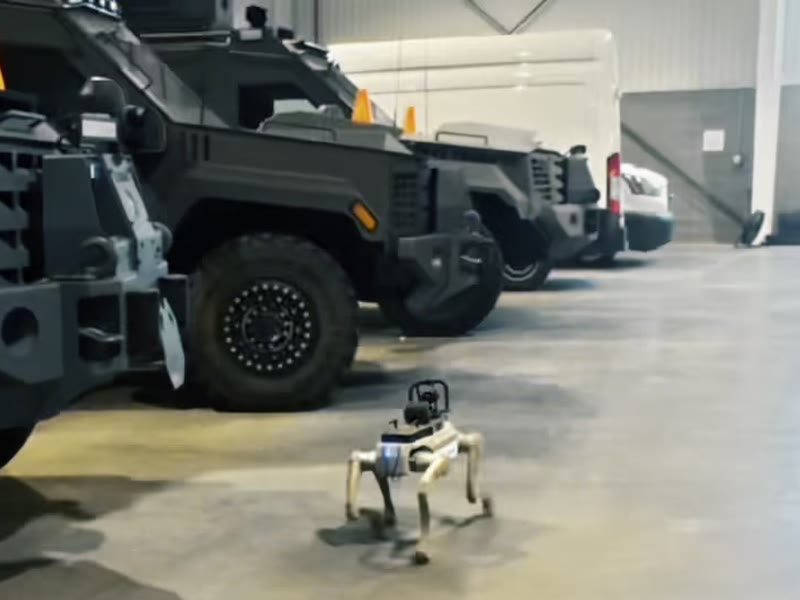
01 — EVALUATE
Start with the real environment and the real use case. Hawk evaluates the mission, operating conditions, workflow, communications needs, and practical constraints before recommending a deployment approach.
Book a field evaluation →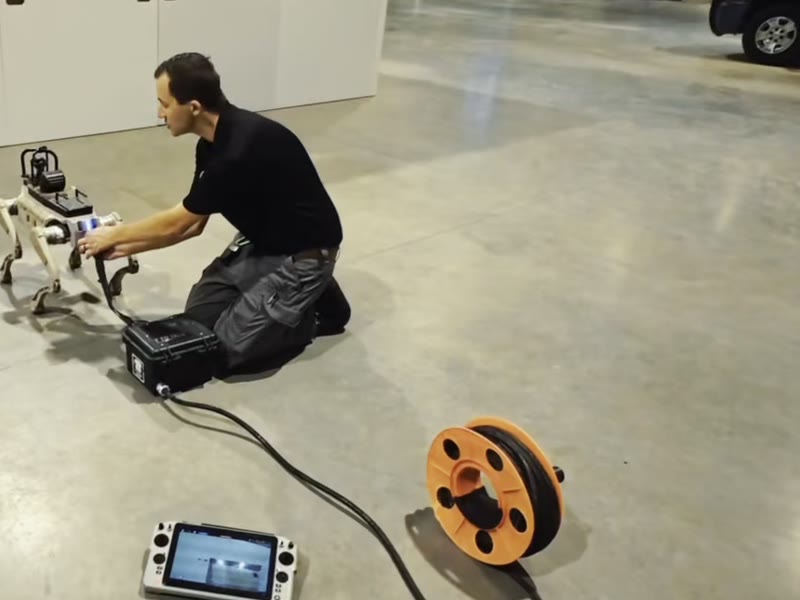
02 — CONFIGURE
Configure the robotic system around the mission—including payloads, communications, remote operation, and the requirements of the operating environment.
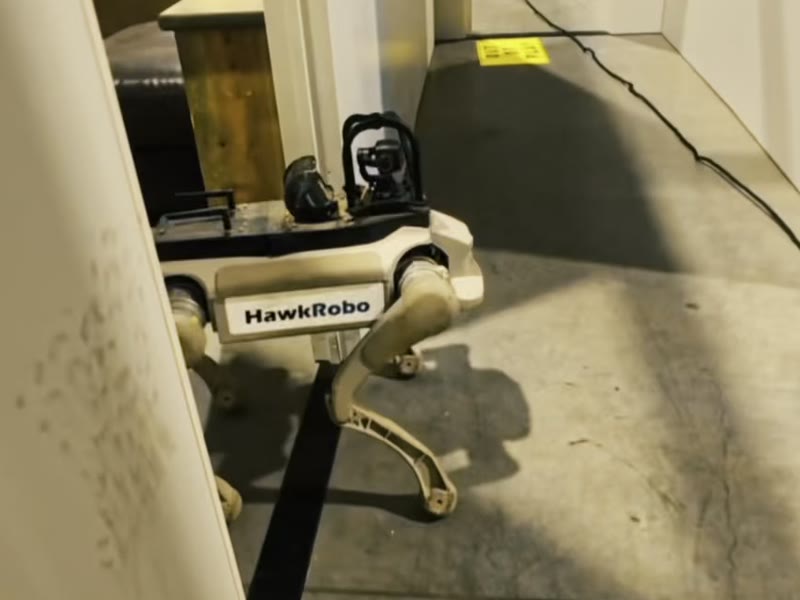
03 — DEPLOY
Prepare operators and put the system into real use. Hawk supports training, field setup, and the transition from evaluation into the customer’s operating workflow.
Discuss a deployment →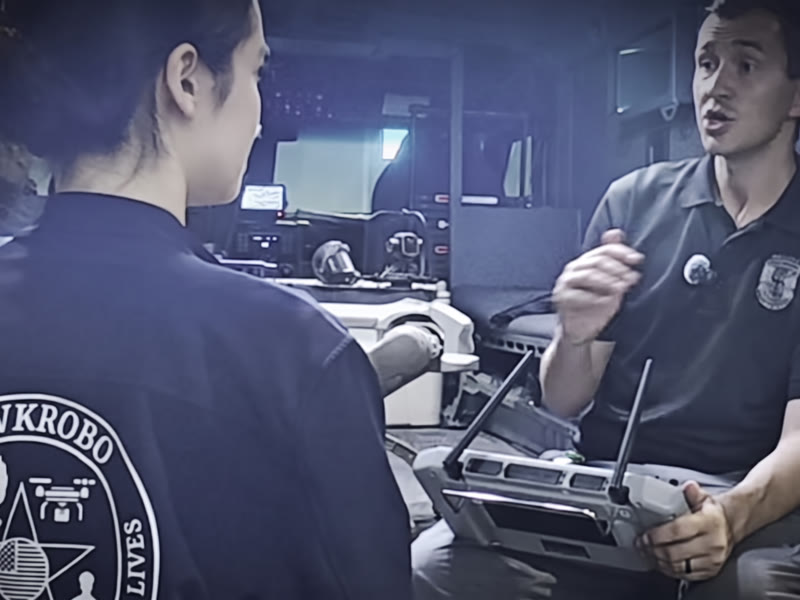
04 — SUPPORT
Support continues after deployment. Field feedback helps Hawk improve system configuration, software, payload integration, service, and the overall deployment experience.


Field use informs what comes next.
[ THE PLATFORM ]
Configured for the mission.
Hawk combines robotic platforms, remote operation, communications, and mission-specific payload integration into systems configured for real-world deployment.
[ CAPABILITIES ]
Platform configuration varies by mission, operating environment and payload requirements. Published specifications follow technical confirmation.


[ PUBLIC SAFETY ]
Built for teams that go in first.
[ REMOTE EYES BEFORE ENTRY ]
Public Safety
Use robotic systems to assess and operate in hazardous, uncertain, or difficult-to-access environments before committing personnel.
Hawk supports public-safety teams with remote operation, mission-specific payload integration, operator preparation, deployment support, and ongoing field service.
Field experience helps inform continued improvements in software, payload integration, system configuration, and deployment support.
Hawk systems have seen sustained tactical and training use with a U.S. state-level public-safety agency.
[ HAWK ADOPTION-FIRST RaaS™ ]
Commercial Operations
Deploy around a defined workflow rather than a general-purpose brief, with the system configured to the work it is actually performing.
Recurring service covers payload integration, configuration changes and lifecycle support as the workflow evolves.
[ ONE SUPPORTED SYSTEM ]
The Platform
Remote operation, communications and mission-specific payload integration in one supported system.
Configuration follows the operating environment, not a fixed product tier.
[ COMMERCIAL / HAWK ADOPTION-FIRST RaaS™ ]
Start with one workflow. Expand when the value is proven.
Hawk Adoption-First RaaS™ gives commercial operators a practical way to deploy robotics around a defined workflow without beginning with a large upfront capital purchase. Start with the work, configure the system around the environment, and expand as operational value becomes clear.
Start with the workflow—not the fleet.
Configure the system around the work, prove operational value, and expand when it makes sense.
A large capital purchase may be required before the workflow is proven.
Start with recurring deployment—without a large upfront capital purchase.
Fleet size and specifications are often committed early.
Start with one defined workflow, with the system configured around the work.
Service, configuration changes, and operating needs may be managed separately.
Service, configuration changes, and deployment support evolve with the workflow.
The robotic hardware becomes an asset the customer must maintain and manage.
Maintenance, refurbishment, and system readiness stay with the deployment.
Expansion typically requires another capital decision.
Expand as operational value becomes clear.
Designed to make adoption practical.
Start with a real use case. Prove the workflow. Build from there.
[ COMPANY ]
The machine should extend the team—not replace it.
Hawk is built around a simple idea: in difficult, uncertain, or potentially hazardous environments, robotic systems should extend human capability while trained people remain in control.
We focus on what happens after the demonstration—how systems are configured, deployed, supported, and made useful in real operations.
[ CONTACT ]
Tell us where the machine needs to go first.
Tell us about the environment, mission, or workflow you are evaluating. We’ll help determine the right next step.
info@hawkrobo.com16 Technology Dr, Suite 128 · Irvine, CA 92618